


|
|
|
|
|
|
|
|

Optimized String Search with MMX™ Technology
| Information in this document is provided in
connection with Intel products. No license, express or
implied, by estoppel or otherwise, to any intellectual
property rights is granted by this document. Except as
provided in Intel's Terms and Conditions of Sale for such
products, Intel assumes no liability whatsoever, and
Intel disclaims any express or implied warranty, relating
to sale and/or use of Intel products including liability
or warranties relating to fitness for a particular
purpose, merchantability, or infringement of any patent,
copyright or other intellectual property right. Intel
products are not intended for use in medical, life
saving, or life sustaining applications. Intel may make
changes to specifications and product descriptions at any
time, without notice. Copyright (c) Intel Corporation 1997. *Third-party brands and names are the property of their respective owners. |
Some of the more complex and/or MMX™ instruction intensive sections are explained in greater detail in the following sections.
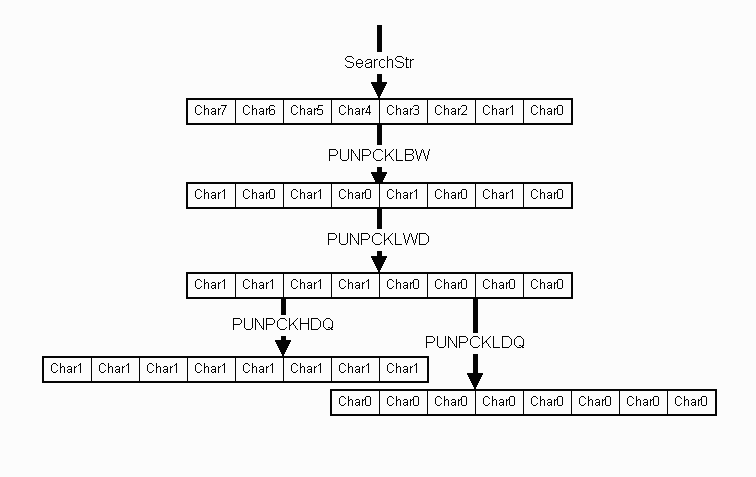
The first instruction, PUNPCKLBW, replicates the low bytes throughout the register. Then PUNPCKLWD unpacks the low words into doublewords, and PUNPCKLDQ and PUNPCKHDQ unpacks the low and high doublewords into quadwords for SearchStr[0] and SearchStr[1], respectively.
It is important that the function performs its own memory alignment, because even if the text buffer is originally 8-byte aligned, if the user performs further searches starting where the last one left off, it is unlikely that the start will be on an 8-byte boundary. To handle this, the first text read is performed regardless of alignment, and then the data is shifted so that the next text read will be aligned, although it will re-read some overlapping characters. The search string is not read often enough to make it worth aligning, and as a smaller variable is likely to be aligned anyway.
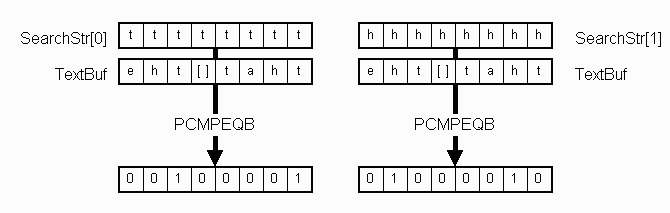
The results from Figure 2 cannot immediately be used. If the text contains SearchStr[0], we want to see whether it also contains SearchStr[1] in the next character. This means that one of the results must be shifted one byte to line up with the other result. If the SearchStr[1] result was shifted to the right, then the high byte would need to contain the comparison result for the character after the last byte in SearchStr[0] , which will not be obtained until the next time through the loop. Shifting the SearchStr[1] result to the left requires the last byte from the previous SearchStr[1] result, which is much easier to obtain.
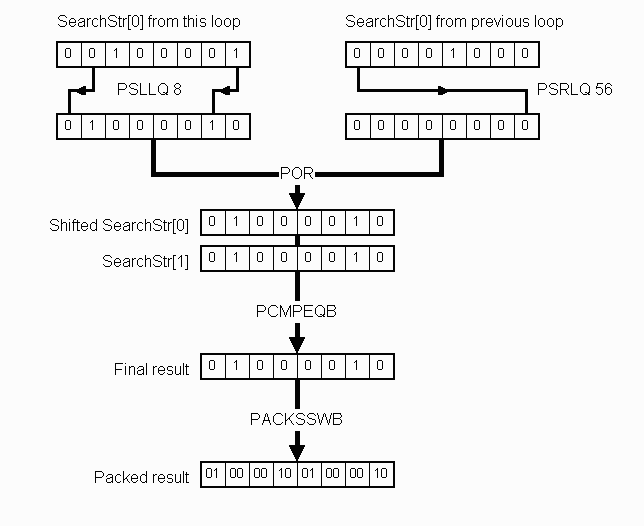
Figure 3 shows the shifts involved in preparing SearchStr[1] for comparison with SearchStr[0]. The SearchStr[1] comparison result from this loop is shifted one byte to the left, and is ORed with a copy of SearchStr[1] from the last loop that has been shifted to the right by 7 bytes. The POR instruction logically ORs all 64 bits. No masks are needed, because the left shift leaves the low byte zero, and the right shift leaves the high 7 bytes zero. Now, the SearchStr[0] and SearchStr[1] results can be compared and packed with saturation from words to bytes so that the entire MMX™ register can be represented with 32 bits.
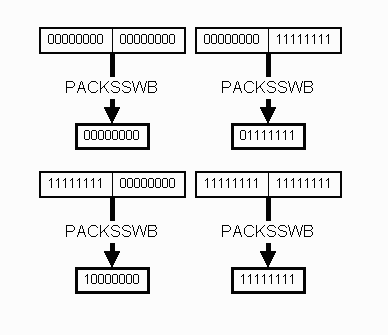
Figure 3 illustrates the four possible cases of the PACKSSWB instruction
and their results. Clearly, the value of the original byte can be found
by checking every fourth bit. The remaining steps are faily simple and
have been adequately described above.
The only difference within the inner, scalar loop occurs before it checks the text character-by-character. It can read directly from the copy of SearchStr, but because the text is still mixed-case, it has to be converted before it can be used. To do this, eight characters of text are read, converted, and stored into a temporary buffer, and the inner loop reads from there. When all eight characters have been verified, another eight are read in and converted.
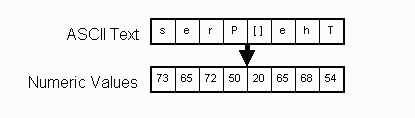
The sample text "The Pres" is compared against the upper and lower bounds for uppercase ASCII letters.

If a character is greater than the lower bound of 40h, and is lower than the upper bound of 5Bh (the actual compare tests whether the characters are greater than the upper bound, which is equivalent), then that byte will contain all ones at the end of the compares.
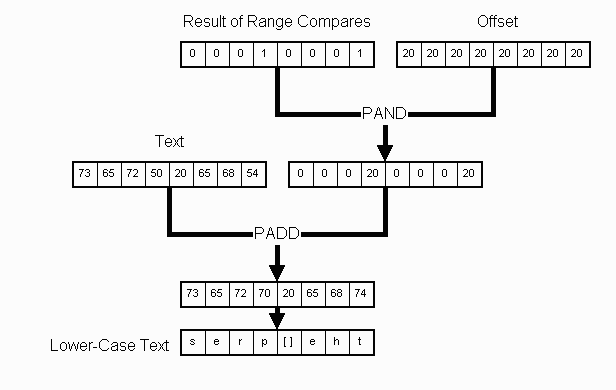
ANDing the result of the compares with the 20h offset between 'A' and
'a' and adding that result to the original text converts any uppercase
letters to lowercase letters. Lowercase letters and other special characters
are unaffected.
The MMX™ technology enhanced string-find works 50% faster than the pure scalar string-find. Even though the MMX™ technology version works eight characters at a time, it is not eight times faster because of the additional overhead of the more complex algorithm. Also, because of this overhead, on very short searches (less than 50 characters) it may be slower than the scalar string-find. During longer searches, more time is spent in the outer loop, which is that part that MMX™ technology accelerated most.
The MMX™ technology case-insensitive string-find is 4.5X faster than
the C-version. The perfomance improvement here is much greater than the
case-sensitive version because MMX™ instructions can convert the case of
eight characters at once, without branches.
__int64 mask=0x07;
char *strstrmmx(const char *TxtBuff, const char *SearchStr)
{
if (SearchStr[1] == '\0')               //Will not work with 1 character search strings
        strstr(TxtBuff, SearchStr);
__asm{
//mix2_strfind PROC C USES edi esi ebx ecx,
//              TxtBuff:PTR BYTE, TxtBuff_Size:DWORD, SearchStr:PTR BYTE, SearchStr_Size:DWORD, No_Case:DWORD

//Initialization
        mov     edi,SearchStr           ;save addr of searchstr
        mov     esi,TxtBuff             ;save addr of txtbuffer
        xor     ecx,ecx                 ;zero ecx to indicate continue
        movq    mm0,dword ptr[edi]      ;load the first 8 char from searchstr
        movd    mm7,esi                 ;alignment code
        punpcklbw mm0,mm0                       start the propagation of searchstr[0]
        punpcklwd mm0,mm0
        pand    mm7,mask                ;find offset of TxtBuff from 8 byte
        lea     edx,[edi+2]                     ;save searchstr[2] address
        movq    mm1, mm0                        ;copy of SearchStr
        movq    mm4,dword ptr[esi]      ;copy the next 8 byts of text buffer into mm4
        punpckldq mm0,mm0                       finish propagating searchstr[0] into whole mmx reg
        punpckhdq mm1,mm1                       finish propagating searchstr[1] into whole mmx reg
        movq    mm2,mm0                 ;save propagate searchstr[0] to mm2 for later recovery
        psllq   mm7,3
        pxor    mm5,mm5
        movq    mm3,mm1                 ;save propagate searchstr[1] to mm3 for later recovery
        psllq   mm4,mm7                 ;shift first 8 bytes by offset
        and     esi,0FFFFFFF8h          ;align TxtBuff pointer
                                        ;end alignment code
MATCH_2_CHARS:
        pcmpeqb mm0,mm4                 ;compare 8 bytes of searchstr[0] to txtbuffer
        pcmpeqb mm1,mm4                 ;compare 8 bytes of searchstr[1] to txtbuffer
        movq    mm6,mm0                 ;copy of results of searchstr[0] compare
        psllq   mm0,8                   ;shift left 1 byte to line up with searchstr[1]

        por     mm0,mm5                 ;combine the current searchstr[0] with the last byte of the previous compare
        psrlq   mm6,56                  ;save the last byte of searchstr[0]

        pand    mm0,mm1                 ;compare searchstr[0] and searchstr[1]
        lea     edi,[esi+1]             ;copy textbuffer just in case we will do byte by byte compare
        packsswb mm0,mm0                ;reduce to 32bits
        push    ecx                     ;ecx indicates stop (1) or continue (0)
        ;1 penalty cycle on PPMT
        movd    eax,mm0                 ;copy ldword of quad compare into eax
        movq    mm5,mm6                 ;save last byte of searchstr[0] for next iteration
        test    eax,eax                 ;set flags
        jz      NO_MATCH_FOUND
FIND_MATCHES:
        test    al,1000b                ;does this byte have info if not then advance 4 bits for next byte
        jz      NEXT_BYTE               ;no match found for this byte
;scalar asm*****************************/
        mov     ecx,edi                 ;copy address of text buffer to ecx
        push    edx                     ;save searchstr[2] address cuz we are clobbering it
mainlupe:
        mov     bl,[edx]                ;copy searchstr[i] to bl
        inc     edx
        or      bl,bl                   ; if we've reached the end of search str, we've
        jz      short success           ; found the first matching substring
        mov     bh,[ecx]                ;copy textbuffer[i] to bh
        inc     ecx
        cmp     bl,bh                   ; characters match?
        je      short mainlupe
        ; failed comparison. recover pointer to searchstr+1
        ; and work on next byte
        pop     edx
        jmp     NEXT_BYTE
success:
        lea     eax,[edi-2]             ;since edi contains textbuffer+2 we must give proper address in buffer
        pop     ecx
        pop     ecx
        jmp     DONE
;************************************/
NEXT_BYTE:
        shr     eax,4                   ;shift right 4 bits
        inc     edi                     ;inc textbuffer offset
        cmp     eax,08h                 ;do we have any more info to process
        jae     FIND_MATCHES
NO_MATCH_FOUND:                         ;no match for the quad words
        add     esi,8                   ;advance the text buffer by 8
        pop     ecx                     ;load remaining size of buffer

        test    ecx,ecx                 ;have we reached the end of the text buffer?
        jnz     DONE_NOT_FOUND          ;if ecx is not zero, quit

        movq    mm4,dword ptr[esi]      ;copy the next 8 byts of text buffer into mm4
        psubb   mm0,mm0                 ;zero out mm0
        movq    mm1,mm4                 ;copy text

        pcmpeqb mm1,mm0                 ;compare text with zero

        packsswb mm1,mm1                ;pack to 32bits
        movq    mm0,mm2                 ;copy SearchStr[0]

        movd    ecx,mm1                 ;store in ecx
        movq    mm1,mm3                 ;copy SearchStr[1]
        jmp     MATCH_2_CHARS
DONE_NOT_FOUND:
        xor     eax,eax                 ;no match found
DONE:
        emms
        }
}       //eax is returned
__int64    mask=0x07,
        difference=     0x2020202020202020,
        low_bound=      0x4040404040404040,
        up_bound=       0x5B5B5B5B5B5B5B5B;
int EndUncapBuf;
char *stristrmmx(char *TxtBuff,char const *SearchStr)
{
if (SearchStr[1] == '\0')               //Will not work with 1 character search strings
        stristr(TxtBuff, SearchStr);
__asm{
//mix2_strfind PROC C USES edi esi ebx ecx,
//              TxtBuff:PTR BYTE, TxtBuff_Size:DWORD, SearchStr:PTR BYTE, SearchStr_Size:DWORD, No_Case:DWORD

//PREP:
        mov     edi,SearchStr           ;save addr of searchstr
        psubb   mm1,mm1                 ;zero mm1
        mov     esi,TxtBuff             ;save addr of txtbuffer
        xor     ecx,ecx                 ;ecx initialized to continue (0)
;capitalize the SearchStr
        xor     eax, eax                ;load with continue (0)
        mov     ebx, dword ptr Search   ;load pointer to copy of lowercase SearchStr
CAP_SEARCH:
        test    eax,eax
        jnz     END_CAP_SEARCH          ;if a null was found, end of string
        movq    mm6,[edi]               ;search string

        movq    mm5,[up_bound]
        movq    mm4,mm6                 ;copy search string

        pcmpgtb mm4,[low_bound]         ;char>low_bound
        movq    mm0,mm6                 ;copy search string
        pcmpgtb mm5,mm6                 ;up_bound>char?
        pand    mm5,[difference]
        pand    mm5,mm4
        add     edi,8                   ;increment Search pointer
        pcmpeqb mm0,mm1                 ;compare search with null
        paddb   mm6,mm5
        packsswb mm0,mm0                ;pack null compare to 32bits

        movq    [ebx],mm6               ;save to Search
        add     ebx,8
        movd    eax,mm0                 ;store compacted null compare
        jmp     CAP_SEARCH              ;repeat if above 0
END_CAP_SEARCH:
        mov     edi,dword ptr Search    ;reload SearchStr
        movq    mm0,dword ptr[edi]      ;load the first 8 char from searchstr
        punpcklbw mm0,mm0               ;start the propagation of searchstr[0]
        punpcklwd mm0,mm0
        movq    mm1, mm0
        punpckldq mm0,mm0               ;finish propagating searchstr[0] into whole mmx reg
        lea     edx,[edi+2]             ;save searchstr[2] address
        punpckhdq mm1,mm1               ;finish propagating searchstr[1] into whole mmx reg
        movq    mm4,dword ptr[esi]      ;copy the next 8 byts of text buffer into mm4
        movq    mm2,mm0                 ;save propagate searchstr[0] to mm2 for later recovery
        pxor    mm5,mm5
        movq    mm3,mm1                 ;save propagate searchstr[1] to mm3 for later recovery
;alignment code
        movd    mm7,esi
        pand    mm7,mask                ;find offset of TxtBuff from 8 byte
        psllq   mm7,3                   ;multiply number of bytes by 8 to get number of bits to shift
        psllq   mm4,mm7                 ;shift first 8 bytes by offset
        and     esi,0FFFFFFF8h          ;align TxtBuff pointer
;end alignment code
MATCH_1ST_CHAR:
;capitalize this qw
        movq    mm6,[up_bound]
        movq    mm7,mm4

        pcmpgtb mm7,[low_bound]         ;char>low_bound
        pcmpgtb mm6,mm4                 ;up_bound>char?
        pand    mm6,[difference]
        pand    mm6,mm7
        paddb   mm4,mm6
;end cap
        pcmpeqb mm0,mm4                 ;compare 8 bytes of searchstr[0] to txtbuffer
        pcmpeqb mm1,mm4                 ;compare 8 bytes of searchstr[1] to txtbuffer
        movq    mm6,mm0
        psllq   mm0,8

        por     mm0,mm5
        psrlq   mm6,56

        pand    mm0,mm1                 ;comp with 1st byte
        lea     edi,[esi+1]             ;copy textbuffer just in case we will do byte by byte compare
        packsswb mm0,mm0                ;reduce to 32bits
        push    ecx                     ;ecx stop (1) or continue (0)
;1 penalty cycle on PPMT
        movd    eax,mm0                 ;copy ldword of quad compare into eax
        movq    mm5,mm6
        test    eax,eax                 ;early out
        jz      NO_MATCH_FOUND
FIND_MATCHES:
        test    al,1000b                ;does this byte have info if not then advance 4 bits for next byte
        jz      NEXT_BYTE               ;no match found for this byte
;scalar asm*****************************
        push    edx                     ;save searchstr[1] address cuz we are clobbering it
        push    edi
uncap:
        movq  mm4,[edi]
        movq    mm0,[up_bound]
        movq    mm1,mm4

        pcmpgtb mm1,[low_bound]         ;char>low_bound
        pcmpgtb mm0,mm4                 ;up_bound>char?
        pand    mm0,[difference]
        pand    mm0,mm1
        mov     ecx,[UncapBuf]          ;copy address of text buffer to ecx
        paddb   mm4,mm0
        movq    [ecx],mm4               ;save in CapBuffer
;uncapped
mainlupe:
        mov     bl,[edx]                ;copy searchstr[i] to bl
        inc     edx
        or      bl,bl                   ; if we've reached the end of search str, we've
        jz      short success           ; found the first matching substring
        mov     bh,[ecx]                ;copy textbuffer[i] to bh
        inc     ecx
        cmp     bl,bh                   ; characters match?
        jne     short mainlupefailed
;check to see if done with current 8 bytes
        cmp     ecx,[EndUncapBuf]
        jne     mainlupe
        add     edi,8                   ;add 8 to position in text buffer
        jmp     uncap                   ;load next 8 chars and uncap
success:
        pop     edi
        pop     ecx
        lea     eax,[edi-2]             ;since edi contains textbuffer+2 we must give proper address in buffer
        pop     ecx
        jmp     DONE
;************************************
mainlupefailed:
    ; failed comparison. recover pointer to searchstr+1
    ; and work on next byte
        pop     edi
        pop     edx
NEXT_BYTE:
        shr     eax,4                   ;shift right 4 bits
        inc     edi                     ;inc textbuffer offset
        cmp     eax,08h                 ;do we have any more info to process
        jae     FIND_MATCHES
NO_MATCH_FOUND:                         ;no match for the quad words
        add     esi,8                   ;advance the text buffer by 8
        pop     ecx                     ;load stop/cont (1/0)

        test    ecx,ecx
        jnz     DONE_NOT_FOUND
        movq    mm4,dword ptr[esi]      ;copy the next 8 byts of text buffer into mm4
        psubb   mm0,mm0                 ;zero out mm0
        movq    mm1,mm4                 ;copy text
        pcmpeqb mm1,mm0                 ;compare text with zero
        movq    mm0,mm2                 ;copy SearchStr[0]
        packsswb mm1,mm1                ;pack to 32bits
        movd    ecx,mm1                 ;store in ecx
        movq    mm1,mm3                 ;copy SearchStr[1]
        jmp     MATCH_1ST_CHAR          ;have we reached the end of the text buffer?
DONE_NOT_FOUND:
        xor     eax,eax                 ;no match found
DONE:
        emms
        }
}       //eax is returned
/* +++Date last modified: 4-Aug-1997 */
/*
** Designation:  StriStr
**
** Call syntax:  char *stristr(char *String, char *Pattern)
**
** Description:  This function is an ANSI version of strstr() with
**               case insensitivity.
**
** Return item:  char *pointer if Pattern is found in String, else
**               pointer to 0
**
** Rev History:  16/07/97  Greg Thayer  Optimized (and possibly de-ANSI-fied)
**               07/04/95  Bob Stout    ANSI-fy
**               02/03/94  Fred Cole    Original
**
** Hereby donated to public domain.
*/
__inline char toupper(char c)
{
return ((c>(char)0x60) && (c<(char)0x7b))? c-0x20:c;
}
char *stristr(const char *String, const char *Pattern)
{
      char *pptr, *sptr, *start;
      for (start = (char *)String; *start != '\0'; start++)
      {
            /* find start of pattern in string */
            for (;((*start!='\0') && (toupper(*start) != toupper(*Pattern))); start++);
            pptr = (char *)Pattern;
            sptr = (char *)start;
            while (toupper(*sptr) == toupper(*pptr))
            {
                  sptr++;
                  pptr++;
                  /* if end of pattern then pattern was found */
                  if ('\0' == *pptr)
                        return (start);
            }
      }
      return(0);
}
* Other brands and names are the property of their respective owners.
* Legal Information © 1998 Intel Corporation